
A diagnosis involving the prostate, bladder, kidney, or testis brings its own specific worries — but the starting questions are usually similar: what does surgery actually involve, is a minimally invasive option available, and who has the experience to do this well. Dr. Nishanth Sanghavi, Surgical Oncologist and Director at Zanish Cancer Hospital, Ahmedabad, treats urologic cancers using robotic-assisted techniques where appropriate, alongside the full range of surgical and multidisciplinary options.
This page gives an overview of robotic uro-oncology surgery — what it covers, how it’s chosen, and where to find detailed information on the specific procedure relevant to your diagnosis.
Uro-oncology is the branch of surgical oncology focused on cancers of the urinary and male reproductive systems — primarily the prostate, bladder, kidney, and testis. Because these organs sit close together in the pelvis and retroperitoneum, and because minimally invasive techniques have advanced rapidly in this field, uro-oncology has become one of the areas where robotic surgery is most widely used and best studied.
Dr. Sanghavi’s uro-oncology practice covers robotic and open surgical management of these cancers, always in the context of a broader treatment plan that may also involve chemotherapy, radiation, or hormonal therapy depending on the specific diagnosis and stage.
Robotic uro-oncology surgery uses a robotic-assisted surgical system, such as the da Vinci platform, to perform cancer operations through a few small incisions instead of one large one. The surgeon — not the robot — controls every movement from a console beside the operating table; the system simply translates hand and wrist motion into smaller, steadier instrument movements, guided by a magnified 3D view of the surgical field.
For urologic cancers specifically, this precision is valuable because many of the relevant organs sit in tight, anatomically complex spaces close to nerves and blood vessels responsible for continence and sexual function. Working accurately in this space matters both for removing cancer completely and for protecting the function patients care about preserving.
Prostate cancer: Robotic radical prostatectomy is one of the most established and widely performed robotic cancer surgeries worldwide, used for localized prostate cancer where surgery is the recommended treatment.
Bladder cancer: Robotic cystectomy — partial or radical removal of the bladder, along with reconstruction of a new way for urine to leave the body — is used for muscle-invasive bladder cancer and select other cases. [See our dedicated Robotic Bladder Cancer Surgery page for full detail.]
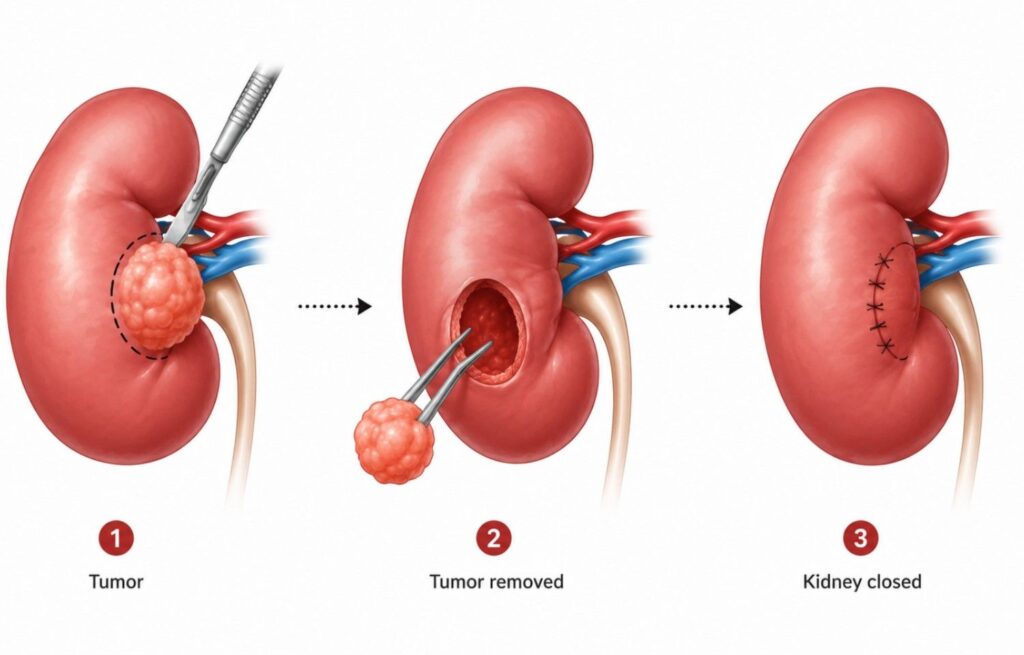
Kidney cancer: Robotic partial or radical nephrectomy removes part or all of an affected kidney, with partial nephrectomy often preferred when feasible to preserve kidney function.
Testicular cancer: Surgical management may include orchiectomy (removal of the affected testis) and, in select cases, robotic retroperitoneal lymph node dissection.
Not every case in each category is suited to a robotic approach — tumour size, location, prior surgery, and overall health all factor into that decision, which Dr. Sanghavi makes individually for each patient based on imaging, biopsy, and clinical assessment.
There’s no single “best” technique that applies to every urologic cancer case. Dr. Sanghavi’s decision-making generally weighs:
This assessment happens during consultation, using your imaging and pathology reports, before any specific procedure is recommended.
Compared with open surgery, robotic uro-oncology procedures are generally associated with smaller incisions, reduced blood loss, and shorter hospital stays — differences that matter across prostate, bladder, and kidney surgery alike, given how much of this anatomy sits deep within the pelvis and retroperitoneum.
That said, robotic surgery isn’t automatically the right choice in every case. Larger or more locally advanced tumours, significant scar tissue from previous surgery, or specific anatomical considerations may make an open or laparoscopic approach safer for some patients. This is exactly why individualized evaluation — rather than a one-size-fits-all recommendation — matters in uro-oncology.
Robotic surgery for urologic cancers is well established internationally and increasingly available across India, with prostate and kidney robotic surgery in particular having among the longest track records of any robotic cancer procedure. As with any major cancer surgery, risks exist and vary by procedure — Dr. Sanghavi discusses those specific to your diagnosis and planned surgery in detail before any operation is scheduled.
Dr. Nishanth Sanghavi is a Surgical Oncologist and Director at Zanish Cancer Hospital, Ahmedabad, with over 14 years of experience and more than 5,000 cancer surgeries performed. He trained in Surgical Oncology at the Gujarat Cancer and Research Institute (GCRI), Civil Hospital, Ahmedabad, and completed advanced training in laparoscopic oncosurgery under Dr. Shailesh Putambekar at Galaxy Care Institute, Pune.
His surgical practice spans uro-oncology, GI oncology, gynaecologic oncology, head & neck oncology, and breast cancer surgery, and he has served as Conference Director and Chairperson at TACOS (Thoracic and Colorectal Oncology Summit) 2026, Ahmedabad.

MBBS - 2006

M.S. in General Surgery - 2010

M.Ch. in Surgical Oncology - 2014

Advanced laparoscopic oncosurgery
The cost of robotic uro-oncology surgery in Ahmedabad varies significantly by procedure — prostate, bladder, and kidney surgeries differ in complexity, length of hospital stay, and any reconstructive steps involved. Rather than a single figure, our team provides a cost estimate specific to your diagnosis and treatment plan during consultation.
Zanish Cancer Hospital accepts insurance, including Mediclaim policies — call the hospital to discuss coverage details relevant to your policy.
If you’ve been diagnosed with a urologic cancer — or already have a treatment recommendation from elsewhere — a second opinion is a reasonable step before deciding on surgery. Dr. Sanghavi reviews your reports and imaging to discuss which approach, robotic or otherwise, may be appropriate for your case.
Lorem Ipsum is simply dummy text of the printing and typesetting industry. Lorem Ipsum has been the industry’s standard dummy text ever since.
Uro-oncology covers cancers of the prostate, bladder, kidney, and testis — the organs of the urinary and male reproductive systems.
Robotic techniques are well established for prostate, bladder, and kidney cancer surgery, and used selectively for testicular cancer procedures. Suitability depends on your specific diagnosis and stage.
Yes — it’s a well-established approach with the surgeon in full control throughout. Individual risks vary by procedure and are discussed in detail at consultation.
This depends on which organ is affected and the cancer’s stage. Dr. Sanghavi reviews your imaging and biopsy results to recommend the specific procedure suited to your case.
Cost varies by procedure — prostate, bladder, and kidney surgeries differ in complexity and hospital stay. Book a consultation for a personalised estimate.
Yes, Zanish Cancer Hospital accepts insurance including Mediclaim. Call +91 7433852300 for details specific to your policy.

Lorem ipsum dolor sit amet consectetur. Tempus libero lectus id velit fermentum et tempus egestas lobortis.
Copyright © 2023 Wise Doctor By Evonicmedia All Rights Reserved.
Powered by Evonicsoft

Advancing Cancer Care Through Robotic Precision
Zanish Cancer Hospital is committed to providing advanced cancer care through modern robotic surgery, comprehensive treatment, and compassionate care for every patient.
This will close in 0 seconds