
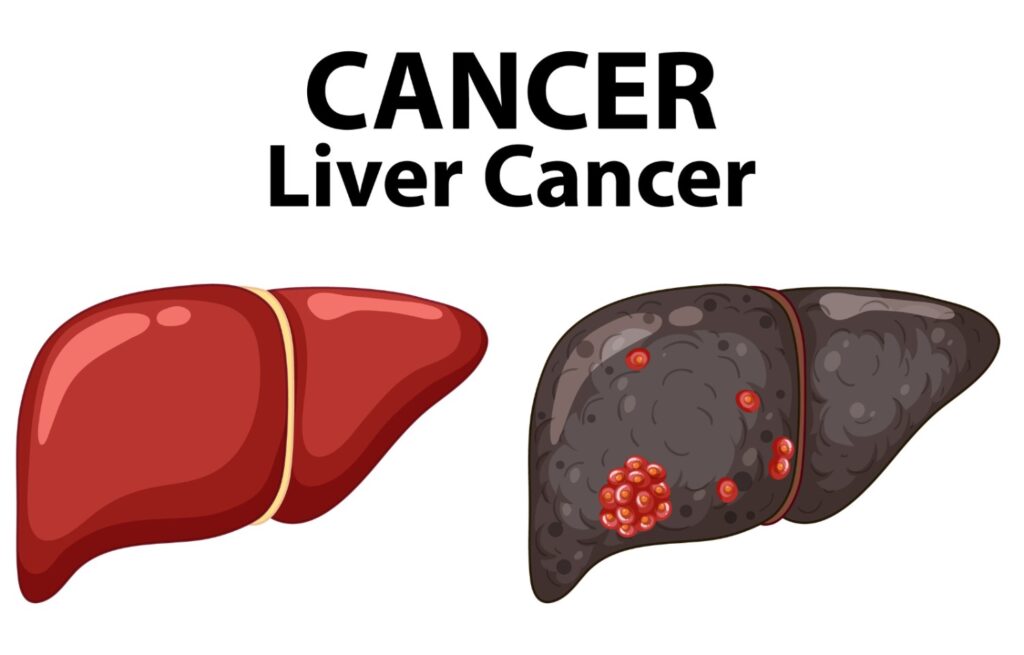
A liver tumor finding — whether it’s a primary liver cancer or cancer that has spread to the liver from elsewhere — often comes with more questions than answers at first. At Zanish Cancer Hospital in Ahmedabad, Dr. Nishant Sanghavi and team offer robotic-assisted liver cancer surgery as one of the treatment options, with a focus on removing the tumor while preserving as much healthy liver tissue and function as your case safely allows.
Robotic liver cancer surgery — known medically as robotic-assisted hepatectomy or liver resection — is a minimally invasive way of removing part of the liver containing a tumor. Instead of the large abdominal incision used in traditional open liver surgery, the surgeon works through several small ports using a robotic-assisted surgical system that translates hand movements into fine, magnified motion.
The liver is a complex organ with a dense network of blood vessels, and the surgeon remains in full control throughout the procedure, seated at a console and directing the instruments in real time while viewing the surgical field in high-definition 3D. That magnification and precision matters considerably here — working close to major blood vessels while removing a tumor requires a level of control that robotic systems are well suited to provide.
Not all liver tumors are the same kind of cancer, and this affects both treatment planning and prognosis:
The surgical approach, the extent of liver that can safely be removed, and the overall treatment plan differ depending on which situation applies to you, and whether your underlying liver function can tolerate resection. Dr. Sanghavi reviews your specific diagnosis, liver function, and imaging before recommending whether surgery, and which type, is appropriate.
Unlike some other organs, the liver has a remarkable capacity to regenerate after part of it is removed — but only within limits, and only if the remaining liver tissue is healthy enough to begin with. This makes liver function, not just tumor removal, a central part of surgical planning. Patients with cirrhosis or reduced liver function may only tolerate removal of a smaller portion, which is why liver function tests and imaging to assess remaining liver volume are done carefully before any surgery is planned.
Robotic precision is particularly valuable here, since more accurate dissection can help spare healthy liver tissue and blood vessels that a larger open incision might put at greater risk. Whether extensive liver-preserving surgery is possible still depends on your tumor’s size, location, and your liver’s overall health — not the surgical approach alone.
Compared with traditional open hepatectomy, the robotic approach typically involves:
Liver surgery carries real risks regardless of technique, particularly around bleeding and liver function after surgery, and these risks are discussed openly and specifically for your case rather than minimized.
Robotic liver resection is generally considered for patients with a limited number of liver tumors that are surgically accessible, adequate remaining liver function after resection, and general fitness for surgery under anesthesia. Patients with more extensive disease, significantly impaired liver function, or tumors involving major blood vessels may be better suited to other treatments — including non-surgical options — which is why thorough staging and liver function assessment always come first.
Before surgery: Your workup typically includes detailed imaging (CT or MRI) to map the tumor and remaining liver volume, blood tests including liver function panels, and — for suspected primary liver cancer — assessment of any underlying liver disease.
During surgery: Performed under general anesthesia, robotic liver resection generally takes a few hours, depending on the extent of liver tissue being removed and its proximity to major vessels.
After surgery: Most patients spend several days in hospital while liver function and recovery are monitored closely. The liver typically begins regenerating in the following weeks, and follow-up blood tests and imaging track this recovery over the following months.
A common concern is whether the liver will “grow back enough” to function normally. In appropriately selected patients with healthy remaining liver tissue, the liver’s regenerative capacity does allow it to recover a substantial portion of its function over time — but this depends heavily on your baseline liver health and how much tissue needs to be removed, which is exactly why pre-surgical liver function assessment is taken so seriously. Dr. Sanghavi discusses your individual outlook based on your own liver function tests and imaging, rather than a general answer that may not apply to your situation.
Dr. Nishant Sanghavi is a surgical oncologist with over 16+ years of experience and more than 6,000 cancer surgeries performed, practicing at Zanish Cancer Hospital in Naranpura, Ahmedabad, where he has served as Director and Consultant Surgical Oncologist since March 2018. He completed his MBBS at Smt. NHL Municipal Medical College, Ahmedabad (2006), his M.S. in General Surgery at Smt. NHL Municipal Medical College, Shardaben Hospital (2010), and his M.Ch in Surgical Oncology at the Gujarat Cancer and Research Institute (GCRI), Civil Hospital, Ahmedabad (2014).
He trained further in advanced laparoscopic oncosurgery under Dr. Shailesh Putambekar at Galaxy Care Institute, Pune, and has served as Conference Director and Chairperson at national oncology forums, including the Thoracic and Colorectal Oncology Summit (TACOS) 2026 in Ahmedabad.
His surgical focus includes GI oncology — covering liver, stomach, colorectal, and other gastrointestinal cancers — alongside uro-oncology, gynecologic oncology, head & neck oncology, breast cancer surgery, and soft tissue sarcoma.

MBBS - 2006

M.S. in General Surgery - 2010

M.Ch. in Surgical Oncology - 2014

Advanced laparoscopic oncosurgery
The cost of robotic liver cancer surgery depends on the extent of resection needed, pre-surgical evaluation, hospital stay duration, and any additional treatment required. Rather than quoting a generic figure, our team provides a personalized estimate during consultation and can walk you through insurance and Mediclaim coverage where applicable.
If you’ve had a liver lesion flagged on a scan or already received a treatment recommendation elsewhere, a second opinion is a reasonable and common step, particularly given how much surgical planning depends on liver function specifics. Dr. Sanghavi reviews your imaging, liver function tests, and pathology to discuss whether robotic liver surgery, a different surgical approach, or another treatment path fits your case.
Zanish Cancer Hospital is located on the 1st Floor, Viva Atelier, Opp. B.D. Patel House, Near Sardar Patel Statue, Naranpura, Ahmedabad, serving patients across Ahmedabad and Gujarat, including SG Highway, Bodakdev, Satellite, and Prahlad Nagar, as well as international patients traveling from the USA, UAE, and UK.
Lorem Ipsum is simply dummy text of the printing and typesetting industry. Lorem Ipsum has been the industry’s standard dummy text ever since.
Colon cancer surgery removes part of the colon and typically reconnects the bowel in the same operation. Rectal cancer surgery is performed deeper in the pelvis, often involves pre-surgical chemoradiation, and more frequently requires a temporary stoma.
Yes — robotic techniques are well established for both, though the specific operation performed differs based on tumour location.
Yes — it’s a well-established approach with the surgeon in full control throughout. Individual risks vary by procedure and are discussed in detail at consultation.
This is determined by your colonoscopy and biopsy findings, based on the tumour’s exact location within the large intestine. Your surgeon will clarify this early in your evaluation.
Cost varies depending on whether the procedure is for colon or rectal cancer, and the extent of surgery involved. Book a consultation for a personalised estimate.
Yes, Zanish Cancer Hospital accepts insurance including Mediclaim. Call +91 7433852300 for details specific to your policy.

Lorem ipsum dolor sit amet consectetur. Tempus libero lectus id velit fermentum et tempus egestas lobortis.
Copyright © 2023 Wise Doctor By Evonicmedia All Rights Reserved.
Powered by Evonicsoft

Advancing Cancer Care Through Robotic Precision
Zanish Cancer Hospital is committed to providing advanced cancer care through modern robotic surgery, comprehensive treatment, and compassionate care for every patient.
This will close in 0 seconds