
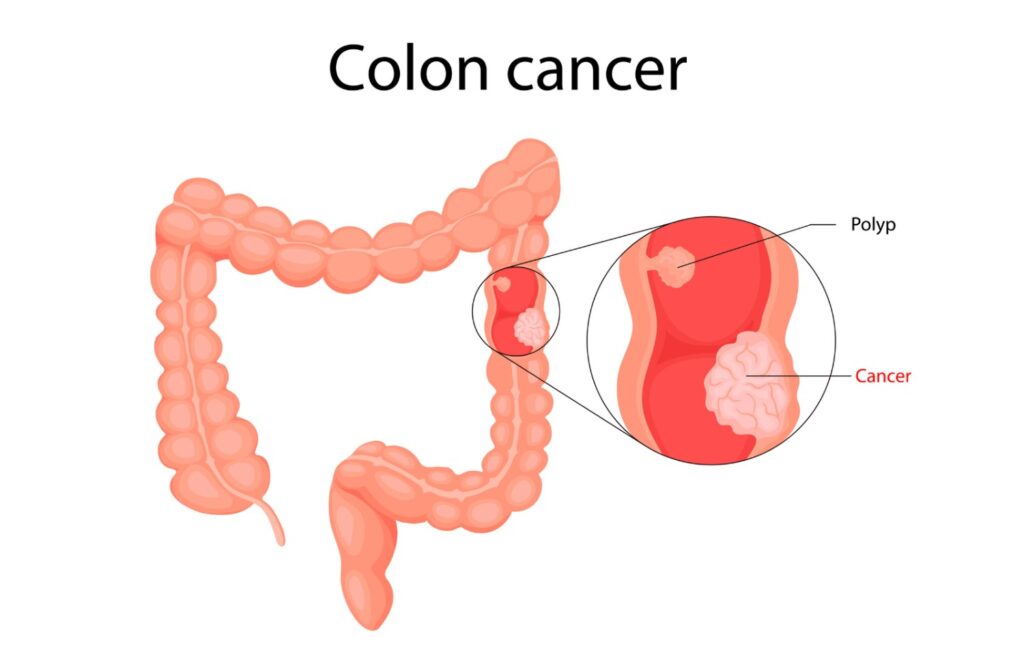
Hearing “colon cancer” and “surgery” in the same sentence is unsettling, even when the recommendation is routine from a surgical standpoint. Most people want three things at that moment: a clear explanation of what the operation actually involves, an honest sense of how it will affect daily life afterward, and a surgeon they can trust to make the right call in the operating room. Dr. Nishanth Sanghavi, Surgical Oncologist and Director at Zanish Cancer Hospital, Ahmedabad, works through all three with every patient before surgery is scheduled.
Robotic colon cancer surgery is a minimally invasive technique for removing cancerous portions of the colon using a robotic-assisted surgical system, such as the da Vinci platform. The robot itself makes no decisions and performs no independent movement — Dr. Sanghavi operates from a console beside the patient, and the system converts his hand and wrist movements into smaller, steadier motions carried out through a few small incisions.
A 3D, high-definition camera provides a magnified, detailed view of the colon, surrounding tissue, and blood vessels — visualization that’s considerably harder to achieve through a standard open incision. For colon cancer surgery, this precision is particularly useful for two things: removing the tumour along with an adequate margin of healthy tissue and nearby lymph nodes, and carefully identifying blood vessels and nerves that need to be preserved.
Surgery is the primary treatment for most colon cancers that haven’t spread beyond the colon and nearby lymph nodes, and in many cases it’s the first step even when chemotherapy is also part of the plan. Whether a robotic approach specifically is appropriate depends on several factors.
Tumour location plays a large role — cancers in the right colon, left colon, and sigmoid colon each involve different surgical anatomy and blood supply. Tumour size and whether it has grown into nearby structures also matter, as does whether you’ve had prior abdominal surgery, which can affect how feasible a minimally invasive approach is.
Dr. Sanghavi reviews your colonoscopy findings, biopsy results, and CT imaging in detail to determine whether robotic, laparoscopic, or open surgery gives you the safest and most effective outcome — this decision is made case by case, not as a default.
The specific operation depends on where the tumour is located:
In most cases, once the cancerous segment is removed, the two healthy ends of the colon are reconnected — a step called anastomosis — allowing bowel function to continue as before. In some cases, particularly where healing needs extra support or the rectum is involved, a temporary or, less commonly, permanent colostomy may be needed. Dr. Sanghavi discusses which outcome is likely for your specific case well before surgery, so there are no surprises afterward.
Nearby lymph nodes are typically removed and examined during the same operation, which helps determine the cancer’s stage and whether further treatment, such as chemotherapy, is needed.
It’s a fair question: is robotic surgery simply the better option? Not automatically — but for suitable cases, it offers real advantages.
Compared with open surgery, robotic colon cancer surgery is generally associated with smaller incisions, less blood loss, reduced post-operative pain, and a shorter hospital stay. Many patients also return to eating normally and moving around sooner, which can support faster overall recovery.
That said, some tumours — particularly larger or more locally advanced ones, or cases involving significant scar tissue from previous surgery — may still be safer to approach through open surgery. Dr. Sanghavi will explain which approach he recommends for your case, and why, rather than defaulting to one technique for every patient.
Before surgery: Diagnosis is typically confirmed through colonoscopy and biopsy, followed by CT imaging to check whether the cancer has spread. Blood tests and a general fitness assessment follow. Dr. Sanghavi discusses the planned extent of colon removal, the likelihood of needing a colostomy, and answers questions about recovery and daily life afterward.
During surgery: Robotic colectomy typically takes a few hours, depending on tumour location and extent. You’ll be under general anaesthesia, with the surgical team monitoring you throughout.
After surgery: Hospital stay is generally shorter than after open colon surgery, though it usually still involves several days of inpatient recovery, particularly to confirm that bowel function is returning safely. Most patients see a gradual return to normal diet and activity over the following weeks. Your care team will outline a recovery timeline specific to your procedure and overall health.
Robotic colon cancer surgery is a well-established technique, used at specialised cancer centres internationally and increasingly across India. Like any major surgery, it carries risks — including bleeding, infection, and, less commonly, issues at the site where the bowel is reconnected — which is why patient selection and surgical experience matter. Dr. Sanghavi discusses the risks specific to your case candidly, before any surgery date is set.
Dr. Nishanth Sanghavi is a Surgical Oncologist and Director at Zanish Cancer Hospital, Ahmedabad, with over 16 years of experience and more than 6,000 cancer surgeries performed. He trained in Surgical Oncology at the Gujarat Cancer and Research Institute (GCRI), Civil Hospital, Ahmedabad, and completed advanced training in laparoscopic oncosurgery under Dr. Shailesh Putambekar at Galaxy Care Institute, Pune.
His surgical practice includes GI oncology, uro-oncology, gynaecologic oncology, head & neck oncology, and breast cancer surgery, alongside active participation in national oncology forums, including serving as Conference Director and Chairperson at TACOS (Thoracic and Colorectal Oncology Summit) 2026, Ahmedabad — a summit specifically focused on thoracic and colorectal oncology, directly relevant to this procedure.

MBBS - 2006

M.S. in General Surgery - 2010

M.Ch. in Surgical Oncology - 2014

Advanced laparoscopic oncosurgery
The cost of robotic colon cancer surgery in Ahmedabad depends on the extent of the colon removed, whether a colostomy is needed, length of hospital stay, and any additional treatment required. Because these factors vary significantly between patients, we don’t publish a fixed price — during your consultation, our team will walk you through a cost estimate specific to your diagnosis and treatment plan.
Zanish Cancer Hospital accepts insurance, including Mediclaim policies — call the hospital to discuss coverage details relevant to your policy.
If you’ve received a colon cancer diagnosis — or already have a treatment recommendation from elsewhere — a second opinion is a reasonable and common step before deciding on surgery. Dr. Sanghavi reviews your colonoscopy findings, imaging, and biopsy results to discuss whether robotic surgery may be appropriate for your case.
Lorem Ipsum is simply dummy text of the printing and typesetting industry. Lorem Ipsum has been the industry’s standard dummy text ever since.
Yes — it’s a well-established surgical approach with the surgeon in full control throughout. Individual risks depend on your case and are discussed in detail at consultation.
Robotic surgery uses smaller incisions and a robotic-assisted system for greater precision, generally leading to less blood loss, less pain, and a shorter hospital stay than open surgery. Suitability depends on tumour size, location, and your overall health.
Not always. In most cases the colon is reconnected during the same surgery. A temporary or permanent colostomy is needed only in specific situations, which your surgeon will discuss with you beforehand.
Recovery is generally faster than after open surgery, but timeframes vary by the extent of surgery and individual health. Your care team will provide a personalised recovery outlook.
Cost depends on the extent of surgery, hospital stay, and any additional treatment. Book a consultation for a personalised estimate.
Yes, Zanish Cancer Hospital accepts insurance including Mediclaim. Call +91 7433852300 for details specific to your policy.

Lorem ipsum dolor sit amet consectetur. Tempus libero lectus id velit fermentum et tempus egestas lobortis.
Copyright © 2023 Wise Doctor By Evonicmedia All Rights Reserved.
Powered by Evonicsoft

Advancing Cancer Care Through Robotic Precision
Zanish Cancer Hospital is committed to providing advanced cancer care through modern robotic surgery, comprehensive treatment, and compassionate care for every patient.
This will close in 0 seconds