
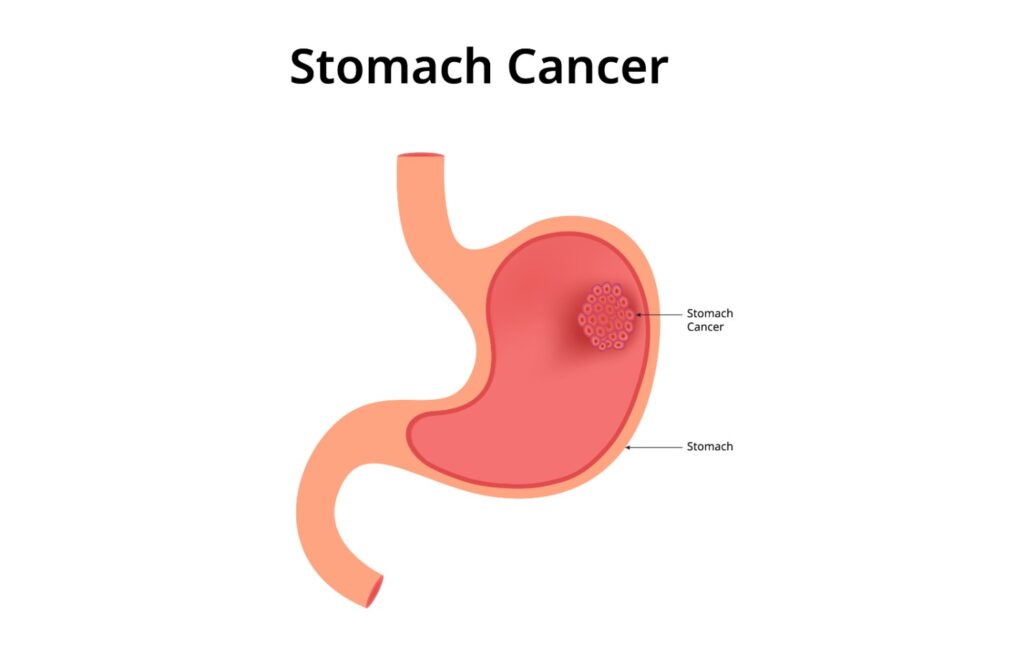
A stomach cancer diagnosis often comes with a very practical worry sitting right alongside the medical one: how will I eat afterward? At Zanish Cancer Hospital in Ahmedabad, Dr. Nishant Sanghavi and team offer robotic-assisted stomach cancer surgery as a treatment option for gastric cancer, along with a straightforward conversation about what the surgery involves and what adjusting to life afterward actually looks like.
Robotic stomach cancer surgery — known medically as robotic-assisted gastrectomy — is a minimally invasive way of removing part or all of the stomach, along with nearby lymph nodes, to treat gastric cancer. Instead of one long incision across the abdomen, the surgeon operates through several small ports using a robotic-assisted surgical system that translates hand movements into precise, magnified motion inside the body.
The surgeon remains fully in control throughout, seated at a console and directing every instrument movement in real time while viewing the surgical field in high-definition 3D. This level of precision is particularly useful in gastric surgery, where accurate removal of lymph nodes around the stomach plays a significant role in cancer staging and long-term outcomes.
Not every stomach cancer surgery is the same, and the extent of surgery depends entirely on where the tumor is located and how far it has spread:
This distinction matters enormously for day-to-day life afterward, particularly around eating patterns and nutrition. Dr. Nishant Sanghavi determines which approach applies to your case based on tumor location, size, and staging — not a default preference for one over the other — and explains what that specific choice will mean for your recovery and diet.
Compared with traditional open gastrectomy, the robotic approach typically involves:
Gastrectomy is major surgery either way, and adjusting to eating differently afterward takes time regardless of surgical technique. The robotic approach primarily eases the physical recovery from the operation itself rather than shortening the broader adjustment period — Dr. Nishant Sanghavi sets expectations accordingly rather than overstating the difference.
Robotic gastrectomy is generally considered for patients with localized or locally advanced gastric cancer who are medically fit for surgery under general anesthesia. Depending on the stage at diagnosis, some patients receive chemotherapy before surgery to shrink the tumor, and further treatment afterward based on the surgical findings. Very advanced or widely spread disease may be managed with a different treatment approach altogether, which is why accurate staging always comes before a surgical recommendation.
Before surgery: Your workup typically includes endoscopy and biopsy results, CT imaging to assess the extent of disease, nutritional assessment, and a discussion of whether chemotherapy is recommended before surgery.
During surgery: Performed under general anesthesia, robotic gastrectomy generally takes a few hours, depending on the extent of stomach removal and lymph node dissection required.
After surgery: Most patients spend several days in hospital, with eating reintroduced gradually — starting with liquids and progressing to soft, then regular foods as the digestive tract heals. Smaller, more frequent meals become the norm for most patients afterward, and a dietitian is typically involved in guiding this transition. Follow-up visits continue to monitor nutrition and recovery well beyond discharge.
The question patients ask most is some version of: “Will I be able to eat normally again?” It’s a fair question, and the honest answer is that eating does change after gastrectomy — portion sizes typically shrink, meals become more frequent, and some foods may need to be introduced gradually. Most patients do adapt to a new normal over time, but the extent of adjustment depends heavily on whether a subtotal or total gastrectomy was needed. Weight loss in the months after surgery is also common and expected to some degree, and is monitored closely. Dr. Nishant Sanghavi discusses these realities directly based on the type of surgery your case requires, rather than offering vague reassurance that doesn’t match what recovery actually involves.
The cost of robotic stomach cancer surgery depends on the extent of gastrectomy needed, whether chemotherapy is part of the treatment plan, hospital stay duration, and post-operative nutritional support. Rather than quoting a generic figure, our team provides a personalized estimate during consultation and can walk you through insurance and Mediclaim coverage where applicable.
Dr. Nishant Sanghavi is a surgical oncologist with over 14 years of experience and more than 5,000 cancer surgeries performed, practicing at Zanish Cancer Hospital in Naranpura, Ahmedabad, where he has served as Director and Consultant Surgical Oncologist since March 2018. He completed his MBBS at Smt. NHL Municipal Medical College, Ahmedabad (2006), his M.S. in General Surgery at Smt. NHL Municipal Medical College, Shardaben Hospital (2010), and his M.Ch in Surgical Oncology at the Gujarat Cancer and Research Institute (GCRI), Civil Hospital, Ahmedabad (2014).
He trained further in advanced laparoscopic oncosurgery under Dr. Shailesh Putambekar at Galaxy Care Institute, Pune, and has served as Conference Director and Chairperson at national oncology forums, including the Thoracic and Colorectal Oncology Summit (TACOS) 2026 in Ahmedabad.
His surgical focus includes gynecologic oncology — covering cervical, uterine, and ovarian cancers — alongside uro-oncology, GI oncology, head & neck oncology, breast cancer surgery, and soft tissue sarcoma.

MBBS - 2006

M.S. in General Surgery - 2010

M.Ch. in Surgical Oncology - 2014

Advanced laparoscopic oncosurgery
If you’ve already received a diagnosis or surgical recommendation elsewhere, a second opinion is a reasonable and common next step. Dr. Nishant Sanghavi reviews your endoscopy findings, biopsy results, and imaging to discuss whether robotic gastrectomy, a different surgical approach, or a chemotherapy-first strategy fits your case.
Zanish Cancer Hospital is located on the 1st Floor, Viva Atelier, Opp. B.D. Patel House, Near Sardar Patel Statue, Naranpura, Ahmedabad, serving patients across Ahmedabad and Gujarat, including SG Highway, Bodakdev, Satellite, and Prahlad Nagar, as well as international patients traveling from the USA, UAE, and UK.
Lorem Ipsum is simply dummy text of the printing and typesetting industry. Lorem Ipsum has been the industry’s standard dummy text ever since.
Colon cancer surgery removes part of the colon and typically reconnects the bowel in the same operation. Rectal cancer surgery is performed deeper in the pelvis, often involves pre-surgical chemoradiation, and more frequently requires a temporary stoma.
Yes — robotic techniques are well established for both, though the specific operation performed differs based on tumour location.
Yes — it’s a well-established approach with the surgeon in full control throughout. Individual risks vary by procedure and are discussed in detail at consultation.
This is determined by your colonoscopy and biopsy findings, based on the tumour’s exact location within the large intestine. Your surgeon will clarify this early in your evaluation.
Cost varies depending on whether the procedure is for colon or rectal cancer, and the extent of surgery involved. Book a consultation for a personalised estimate.
Yes, Zanish Cancer Hospital accepts insurance including Mediclaim. Call +91 7433852300 for details specific to your policy.

Lorem ipsum dolor sit amet consectetur. Tempus libero lectus id velit fermentum et tempus egestas lobortis.
Copyright © 2023 Wise Doctor By Evonicmedia All Rights Reserved.
Powered by Evonicsoft

Advancing Cancer Care Through Robotic Precision
Zanish Cancer Hospital is committed to providing advanced cancer care through modern robotic surgery, comprehensive treatment, and compassionate care for every patient.
This will close in 0 seconds