
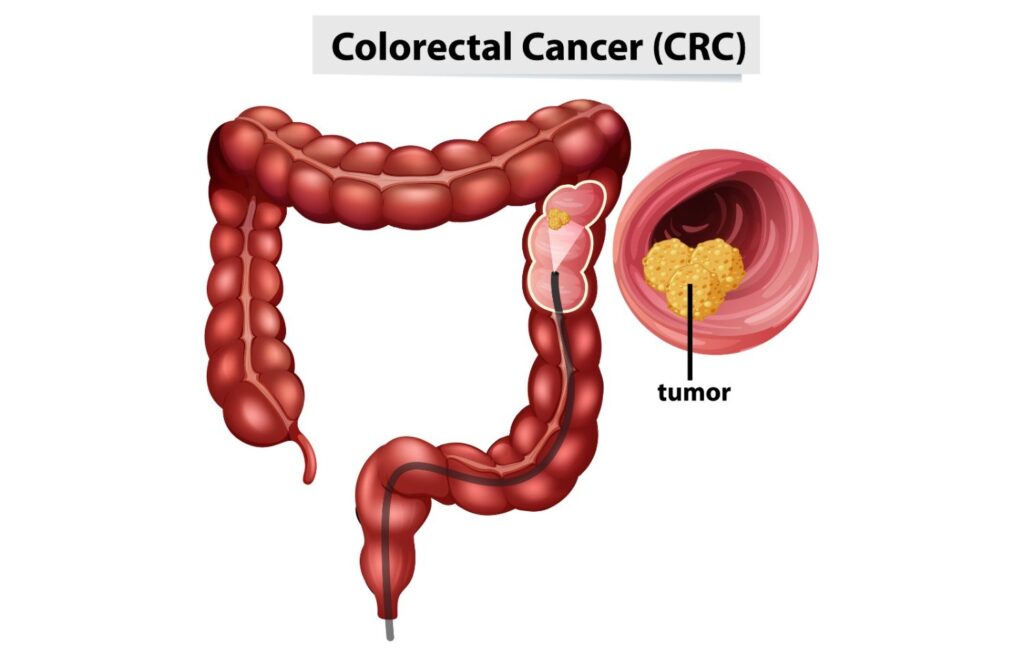
“Colorectal cancer” is a term that covers two related but distinct diagnoses — colon cancer and rectal cancer — and the right surgical approach depends on exactly where the tumour is. Dr. Nishanth Sanghavi, Surgical Oncologist and Director at Zanish Cancer Hospital, Ahmedabad, treats both using robotic-assisted techniques where appropriate, as part of a broader colorectal oncology practice that also draws on chemotherapy and radiation input when needed.
This page explains what colorectal surgery involves at a broader level, how colon and rectal cancer surgery differ, and where to find detailed information on the specific procedure relevant to your diagnosis.
Colorectal surgery refers to surgical treatment of cancers affecting the colon (large intestine) and rectum (the final section of the large intestine, just before the anus). While often discussed together — and while some staging and treatment principles overlap — colon and rectal cancer surgery differ in meaningful ways, largely because of where each organ sits in the body.
The colon lies relatively freely within the abdomen, while the rectum sits deep in the narrow, bony confines of the pelvis, close to the sphincter muscles and other pelvic organs. This anatomical difference shapes both the surgical technique used and the questions patients typically have going in.
Robotic colorectal surgery uses a robotic-assisted surgical system, such as the da Vinci platform, to remove colon or rectal tumours through a few small incisions rather than one large one. The surgeon operates from a console beside the patient throughout — the robot performs no independent movement; it translates hand and wrist motion into smaller, steadier instrument movement, viewed through a magnified 3D camera.
This precision is useful across colorectal surgery broadly, but especially so for rectal cancer, where the confined space of the pelvis makes accurate, careful dissection technically demanding. For both colon and rectal cancer, the goal is the same: removing the tumour with an adequate margin of healthy tissue and nearby lymph nodes, while protecting surrounding structures as much as possible.
Patients are sometimes surprised to learn how differently these two are approached, even though both fall under “colorectal cancer”:
Because the two conditions raise different questions and involve different techniques, we’ve built detailed, dedicated pages for each — linked below — rather than trying to cover both fully on this page.
Suitability for a robotic approach depends on tumour location, size, and stage, along with your overall health and any prior abdominal or pelvic surgery. Dr. Nishanth Sanghavi reviews your colonoscopy findings, biopsy results, and imaging — CT for colon cancer, typically MRI of the pelvis for rectal cancer — to determine whether robotic, laparoscopic, or open surgery offers the safest and most effective outcome for your specific case.
Many colorectal cancers are also managed alongside chemotherapy, and in the case of rectal cancer, often radiation as well — Dr. Nishanth Sanghavi coordinates this multidisciplinary planning with medical and radiation oncology colleagues as part of your overall treatment plan.
Compared with open surgery, robotic colorectal surgery is generally associated with smaller incisions, less blood loss, reduced pain, and a shorter hospital stay — benefits that apply to colon and rectal surgery alike, though they tend to be especially notable in rectal surgery given how confined the pelvic space is.
That said, robotic surgery isn’t automatically right for every patient. Larger or more locally advanced tumours, extensive scar tissue from prior surgery, or specific anatomical factors may make an open approach safer in some cases. This is why individualized evaluation matters more than defaulting to one technique.
Robotic colorectal surgery is well established at specialised centres internationally and increasingly across India. As with any major abdominal or pelvic surgery, risks exist and vary depending on whether colon or rectal surgery is performed — Dr. Nishanth Sanghavi discusses the risks specific to your case candidly, before any surgery date is set.
Dr. Nishanth Sanghavi is a Surgical Oncologist and Director at Zanish Cancer Hospital, Ahmedabad, with over 14 years of experience and more than 5,000 cancer surgeries performed. He trained in Surgical Oncology at the Gujarat Cancer and Research Institute (GCRI), Civil Hospital, Ahmedabad, and completed advanced training in laparoscopic oncosurgery under Dr. Shailesh Putambekar at Galaxy Care Institute, Pune.
His surgical practice includes colorectal, uro-oncology, gynaecologic oncology, head & neck oncology, and breast cancer surgery. He served as Conference Director and Chairperson at TACOS (Thoracic and Colorectal Oncology Summit) 2026, Ahmedabad — a national summit focused specifically on thoracic and colorectal cancers.

MBBS - 2006

M.S. in General Surgery - 2010

M.Ch. in Surgical Oncology - 2014

Advanced laparoscopic oncosurgery
The cost of robotic colorectal surgery in Ahmedabad varies depending on whether the procedure is for colon or rectal cancer, the extent of surgery, whether pre-surgical chemoradiation is needed, and length of hospital stay. Rather than a single figure, our team provides a cost estimate specific to your diagnosis and treatment plan during consultation.
Zanish Cancer Hospital accepts insurance, including Mediclaim policies — call the hospital to discuss coverage details relevant to your policy.
If you’ve received a colorectal cancer diagnosis — or already have a treatment recommendation from elsewhere — a second opinion is a reasonable step before deciding on surgery. Dr. Sanghavi reviews your colonoscopy findings, imaging, and biopsy results to discuss which approach may be appropriate for your case.
Lorem Ipsum is simply dummy text of the printing and typesetting industry. Lorem Ipsum has been the industry’s standard dummy text ever since.
Colon cancer surgery removes part of the colon and typically reconnects the bowel in the same operation. Rectal cancer surgery is performed deeper in the pelvis, often involves pre-surgical chemoradiation, and more frequently requires a temporary stoma.
Yes — robotic techniques are well established for both, though the specific operation performed differs based on tumour location.
Yes — it’s a well-established approach with the surgeon in full control throughout. Individual risks vary by procedure and are discussed in detail at consultation.
This is determined by your colonoscopy and biopsy findings, based on the tumour’s exact location within the large intestine. Your surgeon will clarify this early in your evaluation.
Cost varies depending on whether the procedure is for colon or rectal cancer, and the extent of surgery involved. Book a consultation for a personalised estimate.
Yes, Zanish Cancer Hospital accepts insurance including Mediclaim. Call +91 7433852300 for details specific to your policy.

Lorem ipsum dolor sit amet consectetur. Tempus libero lectus id velit fermentum et tempus egestas lobortis.
Copyright © 2023 Wise Doctor By Evonicmedia All Rights Reserved.
Powered by Evonicsoft

Advancing Cancer Care Through Robotic Precision
Zanish Cancer Hospital is committed to providing advanced cancer care through modern robotic surgery, comprehensive treatment, and compassionate care for every patient.
This will close in 0 seconds